The Bradford-Renduchintala Centre for Space AI
The Bradford-Renduchintala Centre for Space AI, part of the University of Bradford's Institute of Digital and Sustainable Futures, applies artificial intelligence across satellite communications, earth observation, satellite navigation, network security, signal processing, wireless communications and system reliability — driving what the Centre describes as a shift towards low-cost, smart, sustainable exploitation of space. It is named after alumnus Dr Murthy Renduchintala (Bradford, 1983–1991), who funds the Centre, and offers an MSc in Satellite Systems Engineering alongside a strong doctoral programme.
Facilities and Equipments
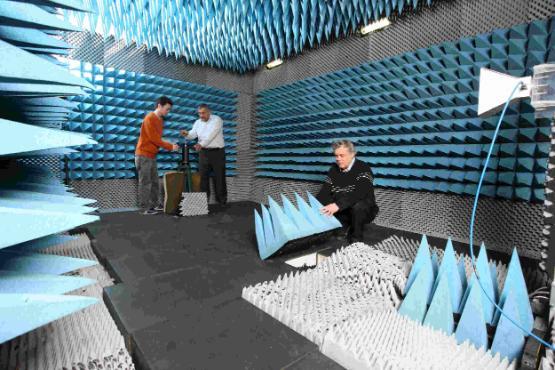
Anechoic Chamber & RF Measurement Facilities
A 100 m³ microwave anechoic chamber for far-field and near-field radiation measurements, automated up to 26 GHz. Additional RF/microwave apparatus supports indoor and outdoor channel measurements using 60 GHz transceivers and MIMO antenna testing.
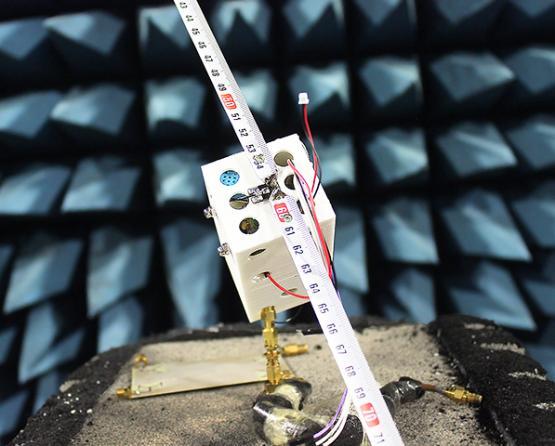
Picosatellite (Engineering Model)
An in-house 2p-satellite prototype: a 3D-printed frame, Raspberry Pi Zero onboard computer, a payload board (camera, temperature sensor, GPS, accelerometer), a communications board with transceiver and antenna, and an EPS power system with battery, charger and solar cells.
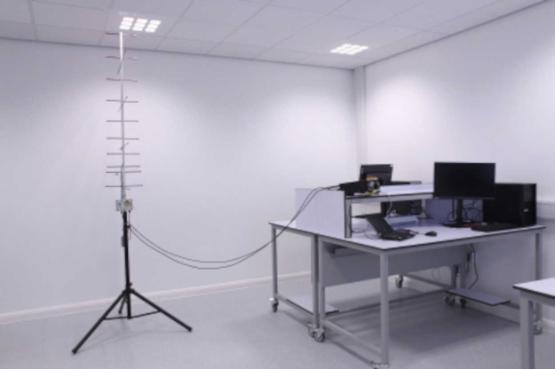
Satellite Ground Station
A UHF/VHF/L-band amateur satellite ground station (145.80–146.00 MHz, 435–438 MHz, 1260–1270 MHz) with three antenna systems: fixed dual-polarisation beam antennas, a steerable high-gain antenna on a Yaesu G-5500 positioner, and the portable field setup shown here. ICOM IC-9700/821/820 transceivers support real-time voice, data and telemetry reception for LEO satellite tracking, research and educational outreach.
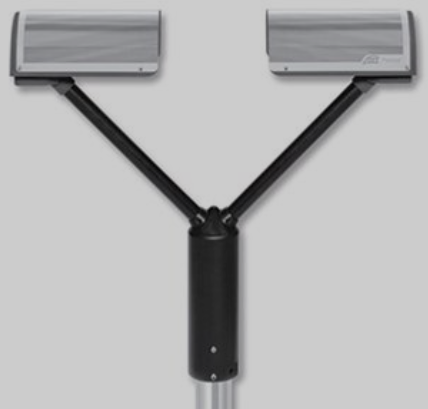
OTT Parsivel² Laser Weather Sensor
A laser-doppler precipitation sensor that continuously measures rain, drizzle, hail and snow across 0.2–25 mm particle sizes at 0.1 mm resolution, reporting real-time intensity, drop-size distribution and velocity in a weatherproof housing.
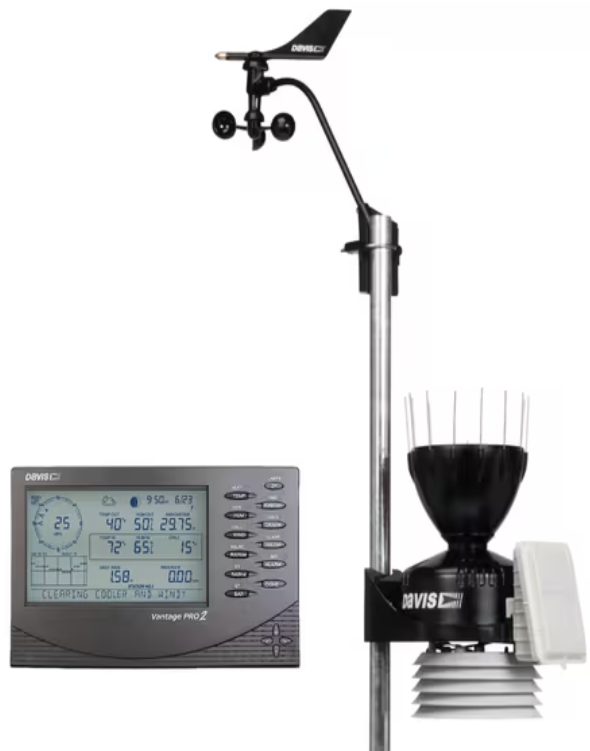
Vantage Pro2 Weather Station
A wireless weather station measuring temperature, humidity, wind speed/direction, rainfall, barometric pressure, UV and solar radiation, with configurable alerts and long-term data logging for real-time and historical analysis.
K-band Beacon Receiver System
Measures satellite signal path attenuation caused by atmospheric rain and moisture at microwave frequencies, tracking the Alphasat (Inmarsat 4A F4) beacon via a roof-mounted 1.2 m steerable dish, with a lab-based tracking receiver and long-term data logging.
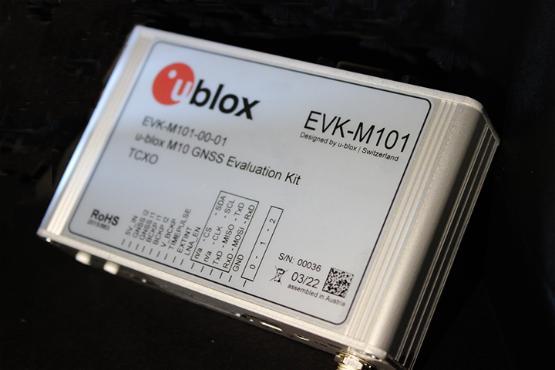
u-blox GNSS Module
The u-blox EVK-8/EVK-M8 GNSS evaluation kit enables simple evaluation of high-performance u-blox 8 and M8 positioning technology, with a USB interface for laboratory, vehicle and outdoor use.
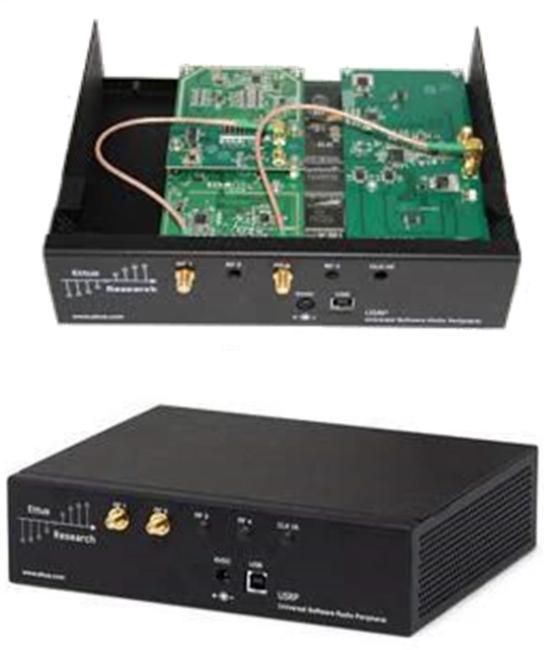
GNU Radio (USRP Platform)
A Universal Software Radio Peripheral platform covering DC–6 GHz for software-defined RF applications in Python, C and LabVIEW, including a TwinRX daughterboard for dual-channel reception and spectrum monitoring.
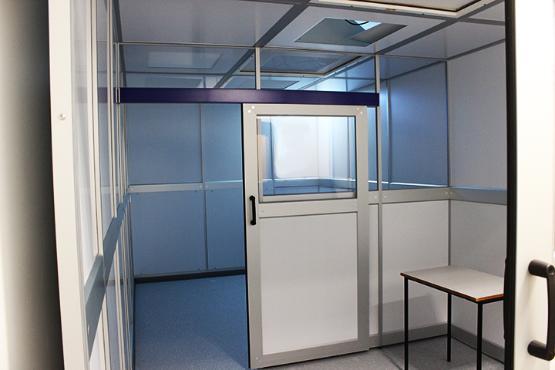
Cleanroom
A controlled environment with strict limits on airborne particulates, temperature and humidity, used for picosatellite platform development and the manufacture and servicing of sensitive hardware such as integrated circuits.
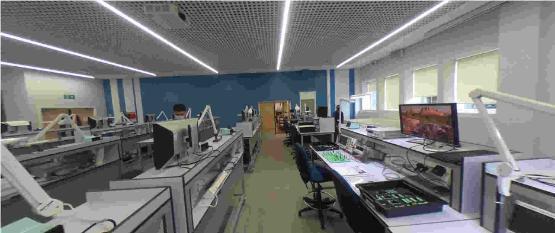
Electronics Lab
Analogue and digital electronics kits, power supplies, oscilloscopes, soldering equipment, FPGA boards, microcontrollers (Arduino, Raspberry Pi), common sensors and MEMS development software.
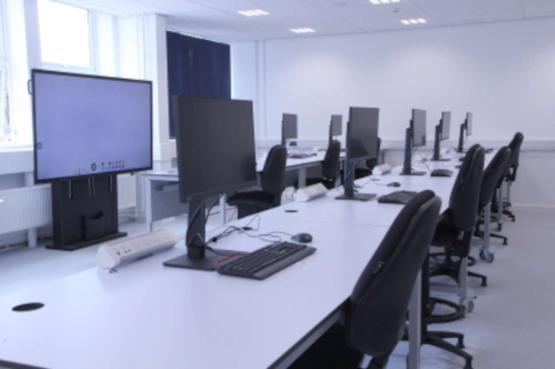
Teaching Lab
A dedicated space for undergraduate, postgraduate, CPD and training delivery, featuring an interactive VZ-3neo.UHD smart-screen visualiser and industrial-grade and open-source analysis software.