New paper: predicting significant solar flares with bidirectional LSTMs
A new paper by Bamidele Moses Akinwumi and Rami Qahwaji shows that following how each sunspot region's magnetic field changes over 72 hours helps predict major solar flares, and makes the dataset freely available.
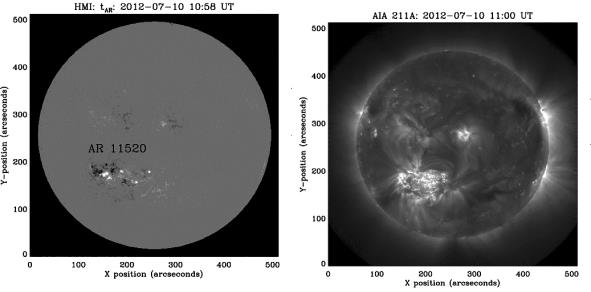
Our latest research paper, "Prediction of Significant Solar Flares Using Bidirectional LSTMs", by Bamidele Moses Akinwumi and Prof. Rami Qahwaji of the School of Computing and Engineering, has been published in the proceedings of the 2026 IEEE International Conference on Electrical/Electronics, Robotics, Artificial Intelligence, and Informatics (ICERAI 2026).
Major M- and X-class solar flares can disrupt satellites, communication systems, satellite navigation and power grids. They are hard to forecast because they are rare, and because the magnetic fields of the active regions that produce them change in complex ways.
What the study did
The authors built a new dataset from the Solar Dynamics Observatory covering 2010 to 2025: 2,081 active regions, each described by 16 magnetic measurements. Each sample follows a single active region for 72 hours, so the model learns how that region evolves, without data from different regions being mixed together. Many earlier flare datasets mix them, which can make results look better than they are.
A bidirectional LSTM, a neural network that reads the 72-hour sequence both forwards and backwards in time, was then trained to predict whether an M- or X-class flare would follow within the next 72 hours. It was compared with two conventional methods, logistic regression and random forest, which only see summary statistics of the same 72 hours.
Results
The models were developed on data from 2010 to 2020 and then tested on 2021 to 2025, which mirrors how a forecast would be used in practice. On that test period the BiLSTM detected 69% of the flaring cases and reached a True Skill Statistic (TSS) of 0.446, a standard skill measure in space weather forecasting, compared with 0.281 for logistic regression and 0 for the random forest, which did not detect any of the flares. As is common in flare forecasting, catching more flares came with a high number of false alarms, which the authors identify as the main challenge for future work.
The paper's wider point is that careful data preparation matters as much as the choice of model: keeping each active region separate, splitting the data by time and tuning the decision threshold all made a large difference.
The curated dataset and code are freely available on Zenodo for other researchers to use.
The work continues more than two decades of solar flare forecasting at Bradford, from the ASAP system used by NASA and ESA to the deep-learning models the group is developing today.
Reference: B. M. Akinwumi and R. Qahwaji, "Prediction of Significant Solar Flares Using Bidirectional LSTMs," 2026 International Conference on Electrical/Electronics, Robotics, Artificial Intelligence, and Informatics (ICERAI), pp. 1-6, 2026. doi: 10.1109/ICERAI69511.2026.11494559
More news
Space 2050: Professor Paul Febvre's masterclass and Cantor Technology Lecture
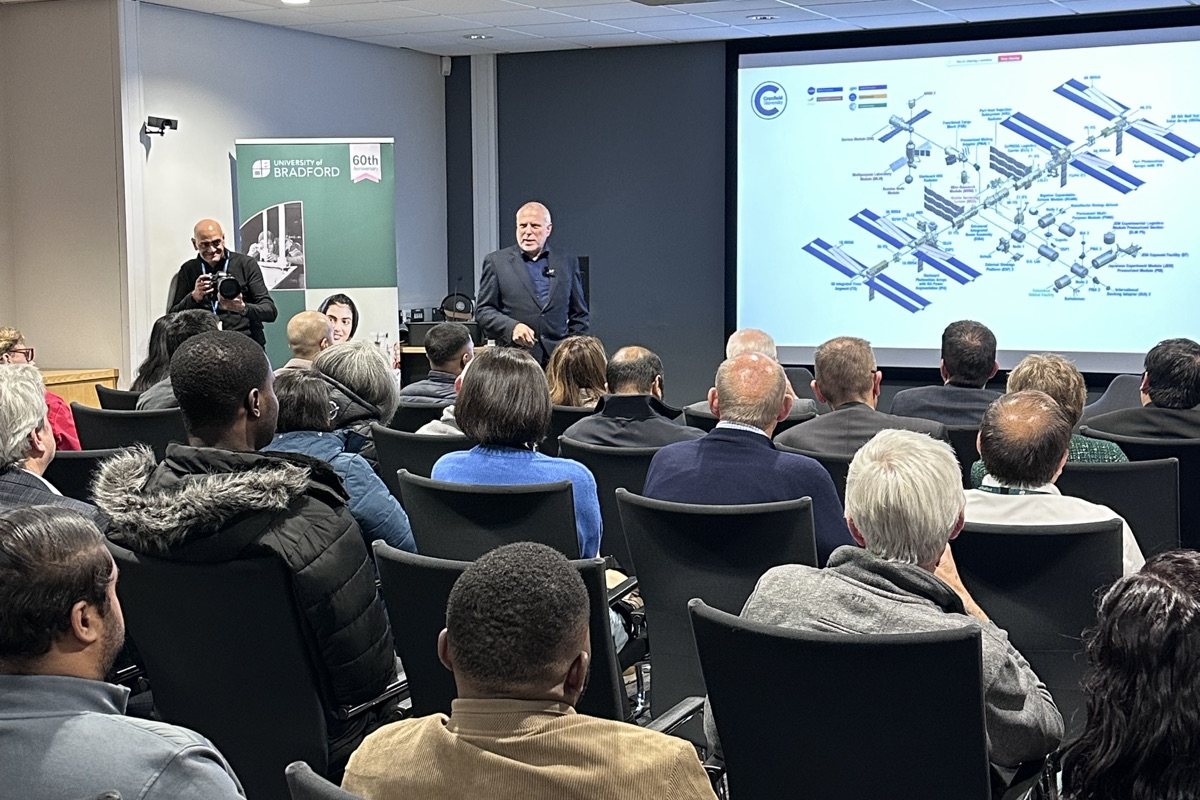
Professor Paul Febvre of Cranfield University spent a day at Bradford, with a masterclass in the afternoon and a Cantor Technology Lecture on the future of space to a full Small Hall in the evening.

Space comes to Bradford: Professor Paul Febvre on the future of space
On Wednesday 21 October, Professor Paul Febvre of Cranfield University gave a masterclass and the Cantor Technology Lecture, "Space 2050: Opportunity, Sustainability and the Future of Life Beyond Earth".
Exploring new Space AI collaborations with Space Hub Yorkshire and York St John University
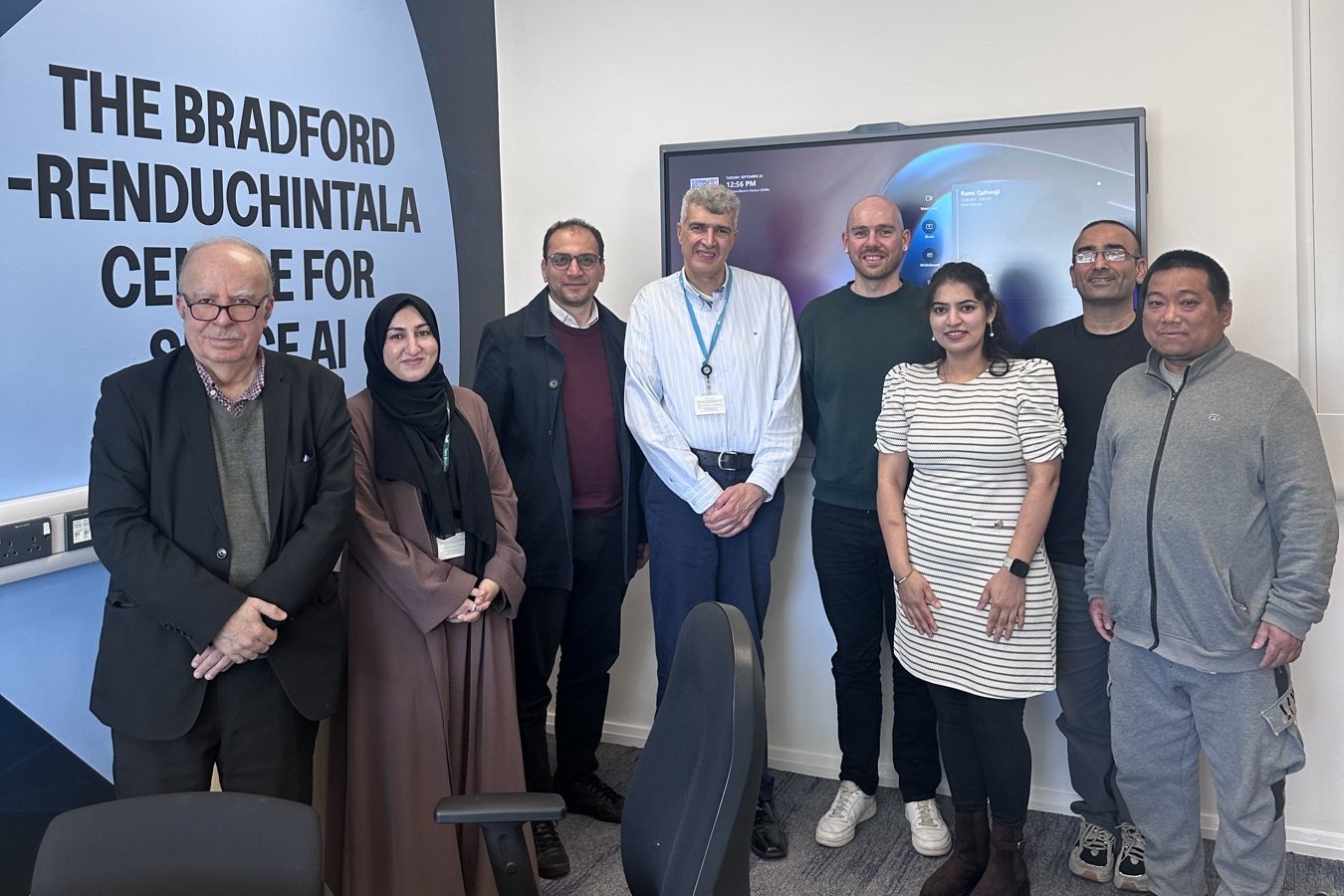
The Centre welcomed David Brady from Space Hub Yorkshire and Dr Rashmi Siddalingappa from York St John University London Campus to explore joint work in Space AI research, education and outreach.